Frame-Perfect Wraps: How Coil Builders Are Applying Speedrun Logic to the Art of Wire Building
If you've ever watched a speedrunner pause a clip frame by frame to dissect a single jump input, you already understand the mindset. The obsession isn't really about the game — it's about mastery. It's about pushing a system to its absolute limit through sheer repetition, knowledge, and a refusal to accept "good enough." Now take that exact energy, swap the controller for a pair of ceramic tweezers and a spool of Kanthal A1, and you've basically stumbled into the world of hand-wrapped coil building.
These people are out here treating wire gauges like split timers.
The Build Bench Is the New Gaming Setup
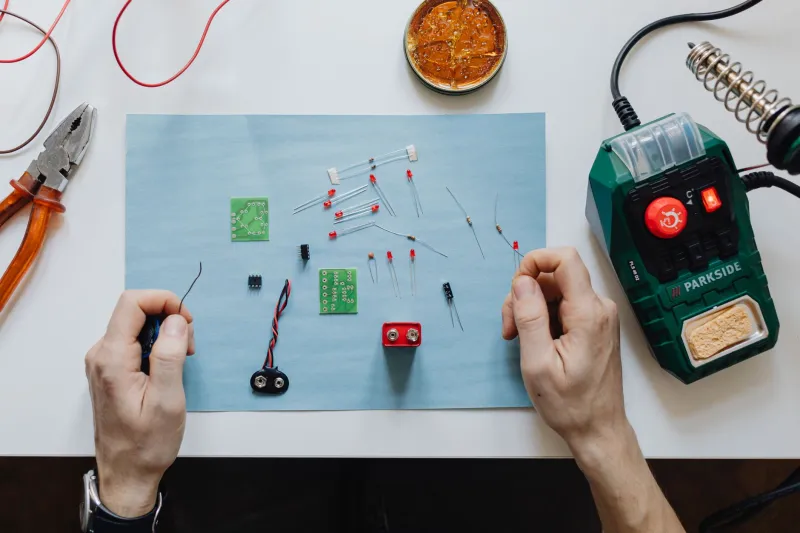
Walk into any serious coil builder's workspace and the first thing you'll notice is the gear. Mandrels in five different diameters. A coil jig that costs more than most people's first vape kit. Calipers. A resistance meter that gets checked obsessively between every single wrap. It looks less like a hobby station and more like a precision lab — or, honestly, like a high-end mechanical keyboard enthusiast's desk, which makes a lot of sense given the overlap in community DNA.
Marcus, a 29-year-old software developer from Austin who goes by "OhmRunner" in several Discord build communities, describes his process in terms that any competitive gamer would immediately recognize. "Every variable is a parameter you're trying to optimize," he says. "Wire material, gauge, inner diameter, number of wraps, leg length — they all interact. Change one thing and you've changed the whole output. It's like adjusting a character's stats in an RPG. Nothing exists in isolation."
He's not being dramatic. The physics of coil building genuinely reward that kind of systems thinking. Resistance determines wattage range. Coil mass affects heat ramp time. Surface area dictates vapor production and flavor intensity. Getting all three to play nicely together at a specific target resistance is, depending on who you ask, either a satisfying puzzle or a maddening rabbit hole. Usually both.
The Speedrun Parallel Isn't Just Vibes
The comparison to speedrunning keeps coming up organically in these communities, and it holds up past the surface level. In speedrunning, players chase frame-perfect inputs — actions that need to land within a single frame (roughly 1/60th of a second) to trigger a specific game state. The margin for error is essentially zero. The reward is a run that flows exactly the way the runner envisioned it.
Coil building has its own version of this. Experienced builders talk about "consistent wraps" the way speedrunners talk about consistent execution. A coil where every loop sits flush against the next, where the legs are symmetrical, where the inner diameter is exactly 3mm and not 3.1mm — that's the frame-perfect input of the build bench. And just like in speedrunning, the difference between a good result and a great one often comes down to muscle memory developed over hundreds of repetitions.
Jenna, a 34-year-old graphic designer from Portland who's been building coils for six years, puts it bluntly: "The first fifty coils you build are basically practice runs. You're not trying to hit a target. You're training your hands to do what your brain already knows."
She's documented her builds in a shared spreadsheet — resistance readings, wattage sweet spots, wire type, wrap count, ramp time — going back nearly four years. It's the kind of data discipline you'd expect from a competitive player tracking their stats between tournament sets, not a vaping hobbyist.
Technique Optimization as a Competitive Sport
The community has developed its own meta, which is a term borrowed directly from competitive gaming. Certain coil styles dominate build discussions the same way certain characters dominate tier lists. Fused Clapton coils — where a thinner wire is wrapped tightly around a core wire — have been a staple for years because of their increased surface area and flavor output. Alien coils, with their distinctive spiked texture, are harder to build but deliver a different kind of heat distribution that some builders swear by.
Debates about which configuration is "best" get heated fast. Forums and subreddits dedicated to coil building read like fighting game communities arguing about frame data — everyone has numbers to back up their take, and nobody is fully wrong.
There's also a timing element that maps almost perfectly onto speedrun culture. Some builders compete informally to see how fast they can produce a clean, functional build to a specific resistance target. It's not an officially organized event, but the challenge circulates through Discord servers and build groups periodically, with builders posting video proof of their times. The rules are simple: start with raw wire, end with a coil installed and firing cleanly, and hit your resistance target within 0.05 ohms. Go.
Marcus has done the challenge multiple times. His current best is under four minutes for a dual Clapton setup. "It sounds ridiculous when I explain it to people outside the hobby," he admits. "But it's genuinely hard. You have to be fast and precise. One sloppy wrap and you're either pulling it apart or accepting a build you know isn't your best work."
Most builders pull it apart.
The Quest for the Perfect Wrap
What keeps people in this hobby — really keeps them — isn't the gear or even the flavor output. It's the same thing that keeps speedrunners grinding the same game for years after they've already achieved world-class times. It's the idea that there's always a better version of the run waiting to be executed.
For coil builders, the "perfect wrap" is a moving target. New wire materials keep entering the market. New coil geometries get invented by builders who got bored with what already existed. The theoretical ceiling keeps rising, which means the chase never really ends.
Jenna describes finishing a build she's genuinely proud of as "the closest thing to a clean run I've ever felt." The analogy lands without any explanation needed, at least in the communities she runs in. "You know when you've done it right. Everything just looks and feels the way it should. And then you immediately want to see if you can do it better."
That's the loop. Build, test, evaluate, iterate. It's not so different from the speedrunner who finishes a record-setting run and immediately pulls up the footage to find the next second to cut.
Why This Matters Beyond the Hobby
There's something genuinely interesting happening in these build communities that's worth paying attention to even if you've never touched a coil jig in your life. The crossover between precision gaming culture and hands-on hardware craftsmanship is producing a group of people who are deeply, almost academically engaged with the technology they use every day.
These builders understand their devices at a level most consumers never will. They're not just users — they're tinkerers, optimizers, and in some cases, genuine innovators pushing the craft in new directions. The speedrun mentality they've imported from gaming culture has given them a framework for continuous improvement that goes beyond casual hobbyist enthusiasm.
In a world where most tech is designed to be a black box, the coil building community is one of the few places where people are actively cracking it open, learning how it works, and then competing to do it better than anyone else.
Frame by frame. Wrap by wrap.