Nic Salts Are Tearing the Vape Community Apart — And Everyone's Okay With That
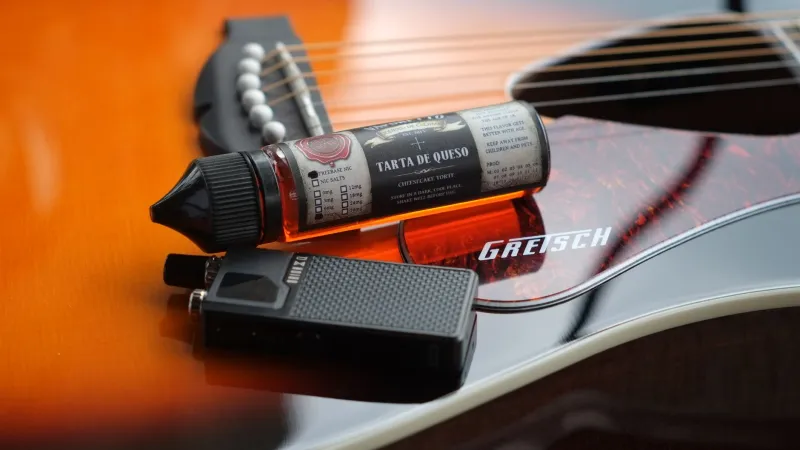
If you've spent more than twenty minutes in a vape subreddit, a Discord server, or literally any comment section on a vaping YouTube channel, you already know: the nicotine salt debate is not really about nicotine salts anymore. It stopped being about chemistry somewhere around 2019 and turned into something much more familiar to anyone who grew up arguing about console generations or debating which Linux distro is worth running. It became tribal. It became identity. And honestly? It became kind of hilarious.
But underneath the memes and the gatekeeping, there's a genuinely interesting technical story — and a surprisingly human one — about why a molecule's pH level became the basis for a community schism.
The Actual Science (Before It Gets Weird)
Let's do a quick lore dump for the uninitiated. Traditional freebase nicotine — the kind that's been in cigarettes and early e-liquids for decades — is nicotine in its purest alkaline form. It hits hard, it hits fast, and at higher concentrations it delivers a throat hit that can feel like swallowing a lit match. That harshness was a feature for some people and a dealbreaker for others.
Nicotine salts change the equation by combining freebase nicotine with an acid — most commonly benzoic acid — which lowers the pH and makes the compound smoother to inhale at much higher concentrations. The result is a product that can deliver 25mg, 35mg, even 50mg of nicotine without the aggressive throat sensation that would make freebase at those levels basically unvapeable. Juul popularized the format in the mid-2010s, and by the early 2020s, nic salts had become the dominant format for disposable devices and pod systems.
So far, so scientific. Here's where it gets messy.
The Throat Hit as Identity Statement
For a significant chunk of the vaping community — particularly the older guard who came up on sub-ohm tanks and rebuildable atomizers — throat hit isn't just a sensation. It's a metric of legitimacy. The idea is that if you're not feeling something, you're not really vaping. You're just inhaling flavored air. This crowd tends to run lower nic concentrations, higher wattages, and freebase liquids. They'll tell you, with complete sincerity, that nic salts are "training wheels" or — and this is a real thing people say — "vaping for people who can't vape."
On the other side, you've got the nic salt camp, which skews younger, tends to prefer the convenience of pod systems and disposables, and genuinely does not care about throat hit as a concept. For them, the point is satisfaction — getting enough nicotine efficiently without the performance. They're not chasing clouds. They're not building coils on a Saturday afternoon. They just want something that works, and nic salts work.
Neither of these positions is wrong. But try telling that to someone three hours deep into a forum thread.
The Gatekeeping Olympics
What's fascinating — and very on-brand for any enthusiast community — is how quickly the technical divide calcified into a hierarchy. The freebase crowd developed a whole vocabulary for dismissing nic salt users. "Salt heads." "Pod kids." There's a not-so-subtle implication that choosing a smooth, high-nic product is somehow choosing the easy path, which is a weird thing to gatekeep about when we're talking about a nicotine delivery system and not, like, competitive climbing.
But the nic salt community isn't innocent here either. There's a counter-snobbery that's developed — a dismissiveness toward "cloud bros" who prioritize spectacle over function, who spend more time talking about their builds than actually using them. Both sides have developed their own in-group language, their own recommended brands, their own Reddit flairs and Discord channels, their own S-tier lists.
It maps almost perfectly onto the kind of console wars that defined early 2000s gaming culture. PlayStation people didn't just prefer PlayStation — they thought Xbox people were making an objectively wrong lifestyle choice. The product preference became a personality trait. Nic salts vs. freebase is doing the same thing, just with more discussion of benzoic acid.
New Users Caught in the Crossfire
Here's where it stops being funny and starts being genuinely worth paying attention to: newcomers are navigating this divide with almost no neutral guidance. Someone who just quit smoking and wants to find a vaping product that works for them hits the community and immediately gets pulled into a debate that's been running for years, loaded with assumptions they don't share and terminology they don't know.
Ask for a recommendation in the wrong forum and you'll get a lecture about why nic salts are "just for ex-smokers who couldn't handle real vaping" — which is ironic, because most people who vape are, in fact, ex-smokers. Ask in a different community and someone will tell you that freebase at high wattage is "outdated" and "unnecessarily harsh."
What almost nobody will say is: it depends on what you want. Because that's not a tribal answer. That's just practical.
Where the Science Actually Lands
If you strip away the culture war stuff, the honest answer is that both formulations have legitimate use cases. Nic salts are genuinely better for smokers transitioning away from cigarettes — the higher nicotine concentration and smoother delivery more closely mimics the satisfaction curve of a cigarette, which matters a lot for habit replacement. Research on cessation tools consistently points to satisfaction as a key variable in whether someone sticks with an alternative or goes back to smoking.
Freebase nicotine, on the other hand, gives experienced vapers more control. Lower concentrations, more customizable hardware, the ability to dial in exactly the kind of experience you want. It's the enthusiast's format in the same way that mechanical keyboards are the enthusiast's input device — more involved, more rewarding if you're into that, completely overkill if you're not.
The ratio wars — the arguments about 3mg vs. 6mg freebase, or 25mg vs. 50mg salts — are real technical conversations that have real answers depending on context. But they've been so thoroughly absorbed into identity politics that the technical conversation is almost impossible to have in public.
The Geek Parallel That Makes All of This Make Sense
Here's the thing: this is what enthusiast communities do. They take something technical, they develop expertise, and then they use that expertise as a sorting mechanism. It's not unique to vaping. It's how audio nerds talk about headphone impedance, how car guys talk about naturally aspirated vs. turbocharged engines, how PC builders talk about AMD vs. Intel. The technical knowledge is real. The tribalism is a side effect of caring a lot about something.
The nic salt divide is, at its core, a community figuring out its own identity in real time. And like most identity debates, it's louder and more contentious than the underlying question probably warrants. Which formulation is better? Depends on you. But which formulation says more about who you are as a person? Apparently, both of them — and that's the part the community can't stop arguing about.
For new vapers trying to navigate this: ignore the tribes, try both, and decide based on what your body and your preferences actually tell you. The doctrine can wait.