Clicks, Clouds, and Cash: The Creator Economy That Vape Brands Didn't Build But Can't Live Without
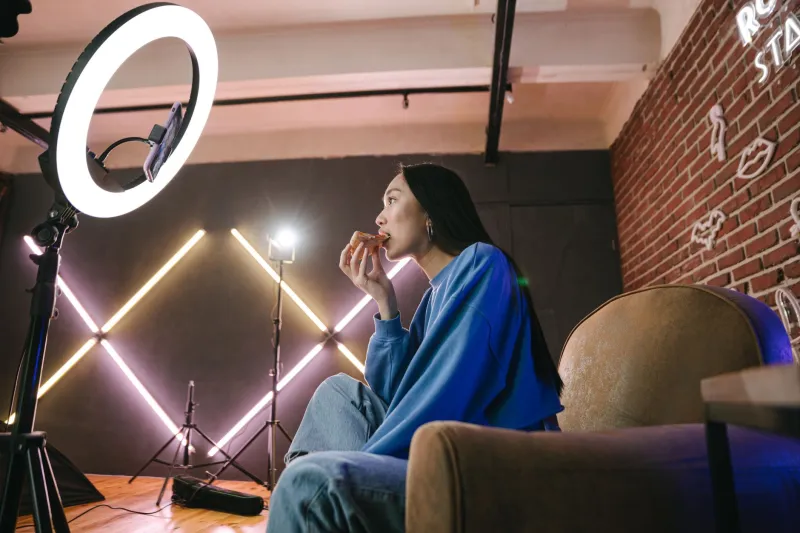
There's a guy on YouTube who has reviewed over 400 vape devices. He films in what looks like a spare bedroom, uses a ring light he probably bought from Amazon, and talks to his camera like it's a friend he's been hanging out with for years. He has 380,000 subscribers. He moves product.
This is the vape streamer economy — and it's a lot more complicated than it looks.
How It Started vs. How It's Going
The pipeline from vape enthusiast to content creator wasn't exactly planned. In the early days of YouTube vape content, most of the people filming themselves were just hobbyists who wanted to show off a new build or share a juice recommendation with people who actually cared. The comment sections were small, the audiences were niche, and nobody was making real money.
Then the algorithm kicked in. Vaping turned out to be an incredibly sticky content category — high purchase frequency, passionate communities, constant new product drops, and an audience that skews toward the exact demographic that watches YouTube and Twitch for hours at a time. Views multiplied. Subscribers stacked up. And brands, which had already been locked out of traditional advertising channels like Facebook and Google, started paying attention.
By the mid-2010s, a quiet but significant shift had happened. Vape brands couldn't run TV spots. They couldn't buy Google ads. Instagram was getting increasingly hostile. But they could reach a Twitch streamer with 50,000 followers who was already talking about their products to an engaged audience of adults who vape. That was a deal worth making.
The Influencer Arrangement — and Its Gray Areas
Here's where things get genuinely murky. The FTC has rules about disclosure. If a creator is paid to review a product, or receives free product in exchange for coverage, that has to be disclosed — clearly, not buried in a description box nobody reads. In theory, this is straightforward. In practice, the vape content space has developed its own culture around disclosure that ranges from meticulous to almost comically vague.
Some creators are rigorous. They open every video with a clear statement: "This device was sent to me by the brand for review. All opinions are my own." They mean it, and their audiences trust them for it. Others drop a quick "gifted" tag in the corner of a thumbnail and call it a day. And then there's a whole tier of arrangements that live in genuine gray zones — affiliate links, discount codes, sponsored placements that look like organic content — where the financial relationship between creator and brand is technically disclosed but practically invisible to a casual viewer.
The FTC has taken action against influencers in other industries for exactly these kinds of arrangements. The vape content world has, so far, largely flown under that radar. Whether that continues is an open question.
Parasocial Trust as a Sales Engine
What makes vape creators uniquely powerful — and uniquely complicated — is the parasocial bond they build with their audiences. These aren't polished brand ambassadors reading from a script. They're real people who vape, have opinions, get frustrated when a coil burns out too fast, and celebrate when a new flavor actually lives up to the hype. That authenticity is the whole value proposition.
And it works. When a creator with a loyal following says a device has a weak draw or that a particular salt nic line tastes like cough syrup, their audience listens. When they say something is genuinely worth the money, people buy it. The conversion rates on creator-driven vape content reportedly outperform standard digital advertising by a significant margin — which is exactly why brands keep coming back.
But that trust is also a two-way vulnerability. Audiences can tell when a creator has been bought. The comment sections on vape review channels are often sharper and more skeptical than the creators themselves seem to expect. "You've never given anything below a 7/10" is a recurring accusation. "Brand sent this so of course it's great" shows up constantly. The audience is paying attention.
Who Actually Shapes the Market?
Here's the genuinely interesting question: are vape creators reflecting consumer taste, or creating it?
The answer is probably both, and the ratio shifts depending on the creator. When a major channel covers a new device from a smaller brand, that device can go from obscure to backordered in a matter of days. Flavor profiles that get consistent love from influential reviewers start showing up in more products. Hardware features that creators complain about — inconsistent airflow, cheap mouthpieces, battery life that doesn't match the spec sheet — tend to quietly get addressed in next-gen versions.
In a market where vape brands can't do traditional consumer research through standard advertising channels, creator feedback loops have become a de facto R&D pipeline. Some brands have leaned into this deliberately, sending pre-release hardware to trusted reviewers specifically to catch issues before a wider launch. It's cheaper than a focus group and faster than a survey.
The Authenticity Tightrope
The creators who seem to last longest in this space are the ones who've figured out how to stay on the right side of a very thin line. They take brand deals. They accept product. They run affiliate codes. But they also burn devices on camera when they deserve it, call out proprietary pod systems that lock consumers into bad deals, and push back on flavor names that don't match what's actually in the bottle.
The ones who tip too far toward pure marketing tend to get found out. Their engagement drops. The comments turn. And eventually, even the brands notice — because an influencer whose audience doesn't trust them isn't actually moving product anymore.
There's a version of this economy that functions pretty well: creators who are genuinely knowledgeable, audiences who are appropriately skeptical, and brands that understand the value of honest feedback even when it stings. That version exists. It's just not the only version.
What This Means for the Rest of Us
If you're someone who uses creator content to make vape purchasing decisions — and statistically, a lot of you reading this do — the takeaway isn't to stop watching. The takeaway is to watch smarter. Check whether disclosures are present and prominent. Notice whether a reviewer ever says anything genuinely critical. See if their rating distribution makes any statistical sense at all.
The vape streamer economy is real, it's significant, and it's not going anywhere. Brands need it too much, creators have built real careers around it, and audiences have proven they'll keep tuning in. But like any ecosystem built on trust, it only works as long as the trust holds.
The comment sections are watching. They usually know.