Dig, Trade, Preserve: Inside the Vape World's Obsessive Hunt for Discontinued Atomizers
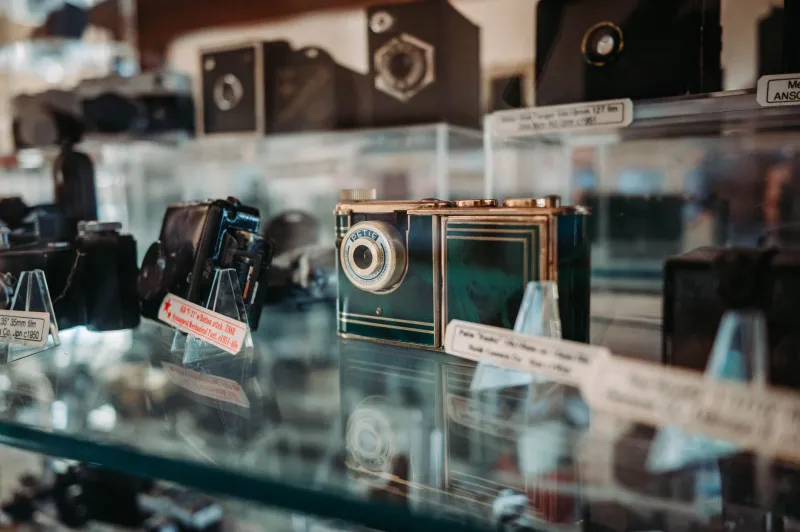
Somewhere in a climate-controlled spare bedroom in suburban Ohio, a guy named Marcus has 47 atomizers he will probably never use. They're arranged in foam-lined cases, photographed from multiple angles, catalogued in a shared Google Sheet, and — in a few special cases — still sealed in their original packaging. He's not a hoarder. He's a collector. And in the vaping world, that distinction matters more than you might think.
"People ask me why I'd spend $120 tracking down a tank I could basically replicate with something from 2023," Marcus told us over a Discord voice call. "And I get it. But that's not the point. The point is the history. The engineering decisions that went into that specific piece at that specific moment."
This is vape archaeology, and it's more organized — and more competitive — than anyone outside the hobby would expect.
The Secondary Market Nobody Talks About
When most people think about the vape resale market, they think about bulk juice lots or lightly used mods flipped on Reddit. But there's a quieter, nerdier layer underneath all of that: a dedicated community of collectors who treat discontinued atomizers the way retro gaming enthusiasts treat original cartridges or hardware modders treat vintage CPUs.
Facebook groups, subreddits, and Discord servers have become the trading floors for this niche. Posts read like eBay listings crossed with tech spec sheets. "NOS [new old stock] Kayfun Lite 2016 batch, still in sleeve, box has minor shelf wear" sits next to "ISO: original Subtank Mini with the green o-rings, not the revised version." Prices for genuinely rare pieces can climb well past what the tanks originally retailed for, sometimes by a factor of three or four.
What's driving demand? Partly nostalgia, partly a genuine appreciation for engineering that was, in some cases, genuinely ahead of its time. But there's also a completionist streak running through this community that will feel immediately familiar to anyone who's ever tried to finish a Pokédex or build a full set of first-edition Magic cards.
Serial Numbers as Archaeology Tools
One of the more fascinating rituals in this collector world is the decoding of manufacturing dates from serial numbers and batch codes — a practice that's less guesswork than you'd imagine. Over years of community documentation, enthusiasts have reverse-engineered the date-stamp logic used by several major manufacturers, building informal reference guides that let you pinpoint when a specific unit rolled off the line.
"Once you know the format, it's actually pretty consistent," explains one collector who goes by the handle VapePaleontologist on Reddit. "You can tell a first-run unit from a mid-production revision just by looking at the number. And for some of these tanks, the early runs used different materials or tolerances that actually affect how they perform."
This kind of forensic enthusiasm has given rise to community-built databases that would put some official brand archives to shame. Enthusiasts have catalogued variant differences — gasket colors, threading changes, logo placement shifts — across production windows spanning years. It's the kind of meticulous documentation you'd expect from a video game preservation group tracking ROM revisions, and the parallel isn't lost on the people doing it.
Why 2015 Specifically?
If you spend any time in these communities, you'll notice a particular reverence for a specific era: roughly 2013 to 2017. This window represents what many collectors consider a golden age of atomizer design — before the market got flooded with disposables, before regulatory pressure started homogenizing hardware, and before the race to the bottom on manufacturing quality really kicked in.
Tanks from this period were often built with tighter tolerances, more interesting airflow engineering, and materials that aged better than some of what followed. They were also produced in smaller quantities, which matters a lot when you're talking about collectibility. A tank that sold 50,000 units in a two-year window before being discontinued is genuinely harder to find in pristine condition than something still in active production.
There's also a "they don't make 'em like that anymore" sentiment that runs through a lot of these conversations — and honestly, in some cases, it's justified. The vaping industry moved fast, and not every innovation from that era got carried forward.
The Preservation Argument
Beyond the thrill of the hunt, a chunk of this community frames what they're doing in explicitly preservationist terms. The argument goes something like this: vaping has a history worth documenting, that history is encoded in physical objects, and if nobody saves those objects, that history disappears.
It's the same logic that drives retro game preservation, vintage synthesizer collecting, or the archiving of early internet ephemera. Hardware tells you things that documents can't. The way a tank was machined, the alloys used in its construction, the design compromises baked into its geometry — all of that is information about a moment in time that can't be fully reconstructed from a spec sheet.
Some collectors have gone further, contributing to wiki-style documentation projects that attempt to create comprehensive records of discontinued hardware. Think less "cool stuff I own" and more "reference archive for future researchers." Whether vaping will ever have the kind of cultural historians who'd actually use those archives is an open question, but the impulse to build them feels genuine.
The Gear Anxiety Is Real
Not everyone in the community is fully at peace with the collector impulse, though. There's a recurring, slightly self-aware joke in these spaces about spending more time sourcing a tank than actually using it — and the joke lands because it's true for more than a few people.
"I have stuff I've never wicked," admits one collector. "Like, I tell myself I'm going to set it up eventually, but part of me doesn't want to put coils in it because then it's not NOS anymore. Which is insane, I know."
It's the same tension that haunts any collector community — the gap between the object as artifact and the object as tool. A sealed copy of a classic game has a different kind of value than a played one. A mint atomizer exists in a weird superposition between hardware and historical object.
More Than Nostalgia
What makes this hobby interesting from the outside isn't just the collecting behavior itself — it's what it says about how vaping has matured as a culture. The fact that there's a secondary market for discontinued hardware, that people are doing serial number archaeology, that communities are building preservation archives — all of that points to a community that's developed enough history to feel worth preserving.
Geek culture has always done this. It did it with games, with comics, with synthesizers, with vintage computing. The vape community is, in its own way, doing the same thing: deciding that its past matters, and that somebody should be paying attention to it.
Marcus is already thinking about what comes next for his collection. He's got his eye on a few pieces from the early pod system era that he thinks are undervalued right now. "Give it five years," he says. "People are going to be hunting those down the same way they hunt the old RTAs today."
He's probably right.