Stop the Clock: Inside the Community Turning Vape Juice Tasting Into a Timed Sport
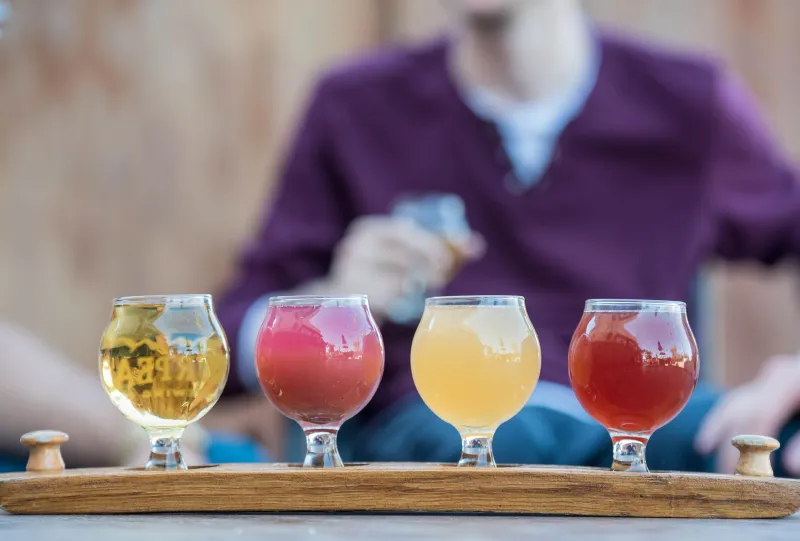
Somewhere between a wine sommelier's tasting notes and a speedrunner's split timer, a niche corner of the vape world has built something genuinely weird and kind of brilliant. Call it competitive flavor evaluation. Call it gamified palate training. Call it whatever you want — just know that there are people right now with stopwatches, color-coded scorecards, and Discord servers dedicated to doing it faster and more accurately than you.
And honestly? It tracks. If you've ever watched a vape enthusiast go full forensic scientist over a new juice drop — breaking it into top notes, mid notes, and finish like they're judging a craft cocktail competition — you already understand the impulse. The jump from "obsessive taster" to "timed competitive taster" is smaller than it sounds.
Where the Speedrun Meets the Drip Tip
The methodology borrows heavily from gaming's speedrunning culture, and the parallels are hard to miss. Speedrunners don't just play games fast — they build reproducible frameworks. They document routes, define categories, and debate endlessly over what counts as a valid run. Flavor speedrunners are doing the same thing, just with atomizers instead of controllers.
The basic structure goes something like this: a taster has a fixed window — usually somewhere between 90 seconds and three minutes — to evaluate a juice across a standardized set of criteria. Flavor accuracy (does it taste like what it says on the label?), complexity (how many distinct notes can you identify?), throat hit, cloud production, and finish length. Each category gets a score. The whole session gets a timestamp. Post your results, compare with the community, repeat.
Some groups have pushed the format further, introducing blind runs — where the taster doesn't know what flavor they're evaluating — and relay formats where multiple tasters cycle through the same juice back to back, each building on the last person's notes. It's part sensory science, part competitive gaming, and part group therapy for people who feel very strongly about whether a strawberry vape actually tastes like a strawberry.
The Case for Quantifying Taste
Talk to the people running these sessions and you'll hear a consistent argument: subjectivity doesn't have to mean chaos. "Every review I read before this was basically vibes," says one community organizer who runs weekly tasting events on a mid-sized Discord server. "Someone would say a juice was 'smooth' or 'complex' and that meant nothing without a reference point. At least if we're all using the same rubric, we can actually compare notes."
There's something genuinely useful here. The vape market is enormous and often opaque. New juice drops constantly, marketing copy is almost universally useless, and word-of-mouth recommendations vary wildly based on individual palate preferences. A standardized tasting framework — even an imperfect one — gives buyers a more reliable signal than a five-star rating left by someone whose flavor baseline is entirely different from yours.
The leaderboard element adds a layer of accountability too. When your evaluations are public and timestamped, you're incentivized to be consistent. Tasters who score erratically or whose notes never align with the community consensus get called out, same as a speedrunner posting a suspicious time without video proof.
The Purists Are Not Impressed
Not everyone is here for it, though. The resistance from the vape community's more contemplative corner is real and, depending on who you ask, pretty reasonable.
"Taste is one of the most personal, context-dependent things a human being can experience," argues one veteran reviewer who's been writing flavor breakdowns since the early days of sub-ohm culture. "Putting a timer on it doesn't make it more scientific. It just makes it more anxious. You're going to miss things. You're going to rush your palate."
There's a legitimate sensory science argument lurking under that frustration. Olfactory fatigue — the phenomenon where your nose and taste buds essentially stop registering a stimulus after repeated exposure — is a real constraint that competitive tasting formats have to actively work around. Serious tasters use palate cleansers, rest periods, and calibration juices to manage it. But when you're racing a clock, those safeguards get compressed.
The purists also push back on the leaderboard culture itself. Ranking tasters creates hierarchy, and hierarchy in a hobby built around personal preference feels philosophically off to a lot of people. "Who's the best at tasting things?" one forum commenter put it bluntly. "That question doesn't make sense. It's not a skill. It's a body part."
Two Communities, One Drip Tray
What's interesting is that both camps seem to know they need each other, even if they'd never admit it at a convention panel. The competitive tasters produce a volume of structured data that the community has never had before — consistent, comparable, searchable. The purists produce the kind of nuanced, atmospheric flavor writing that actually makes someone want to try a juice in the first place.
Some of the more thoughtful speedrun-style groups have started building in what they call "open notes" rounds — unstructured time after the timed evaluation where tasters can just... experience the juice without a rubric. It's a small olive branch, but it suggests the format is still evolving.
And evolution is kind of the whole point. Speedrunning didn't emerge as a fully formed discipline either. It started as a bunch of people on forums arguing about whether a particular shortcut counted, and it grew into a culture with dedicated events, charity marathons, and its own internal mythology. Competitive vape tasting is maybe three years into that same arc.
What It Says About the Vape Community Right Now
Zoom out a little and this whole phenomenon says something worth noting about where vape culture is in 2024. The early days of the hobby were defined by hardware obsession — wattage wars, coil builds, cloud competition. The middle era brought juice culture and a genuine explosion of flavor creativity. What's happening now feels like a maturation phase, where enthusiasts are building the critical infrastructure — the vocabulary, the frameworks, the shared standards — that turns a hobby into something that can sustain itself long-term.
Gamifying the tasting process is one way of doing that. It's not the only way, and it's probably not the right way for everyone. But it's a distinctly geek-brained approach to a problem that the vape world has been quietly struggling with forever: how do you talk about something as slippery as taste in a way that actually communicates something?
The speedrunners think they've got an answer. The purists think the question itself is the problem. Somewhere in between, there's probably a really good juice that deserves better than both camps are giving it.
At least someone's taking notes.